 Sparklets
Use casehome3 min read
Five painters, four quotes, one decision
A member had put off painting the house for two years. He handed the whole job to the assistant, and from then on his part was reading updates in the app and saying go.
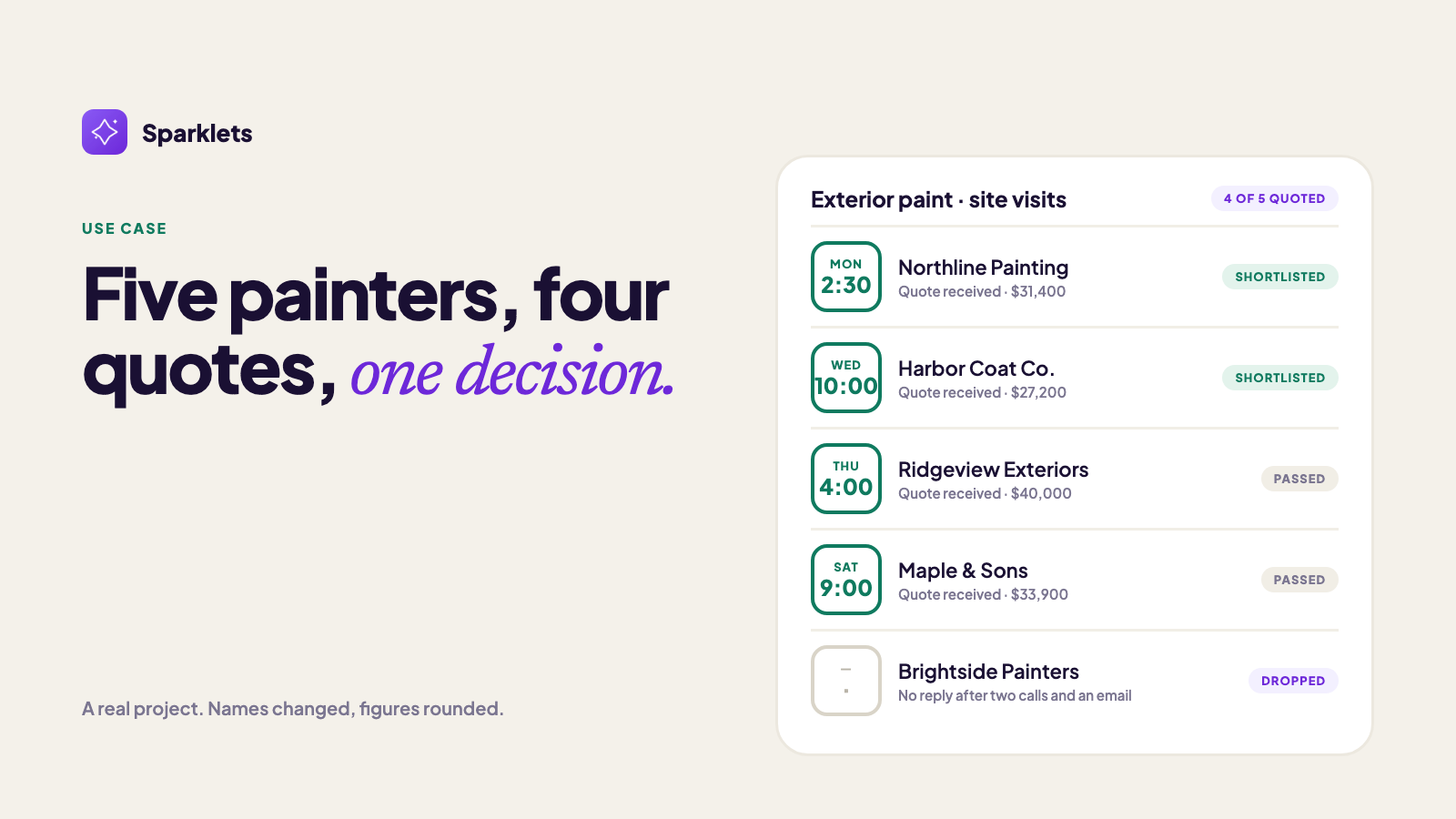
The house needed painting, and the member knew it. A busy professional in the New York area with a travel schedule that ate most weeks, he had been putting it off for two years. Not the painting. The part before the painting: finding painters, getting each one to a site visit on a day he was home, comparing quotes that never line up, and then keeping a crew on schedule. So he handed the whole project to his assistant with one instruction: get me quotes, help me choose, and see it through to the last payment.
What the assistant did
It found five local painting companies and reached out to each. Four came back with a quote after a site visit. The member never coordinated a single one of those visits. The assistant worked the slots out with each company against his calendar and told him the result in one line: Monday 2:30, this company is coming. His part was to be home.
The quotes ranged from about $27,000 to $40,000 for the same house, which is normal and is exactly why people put this off.
It laid the four out side by side: scope, prep work, paint line, warranty, start date. Two made the shortlist. The member picked those two. The assistant then negotiated by email with both, with the member reading along and setting the limits. The final price came in around $23,000, below the lowest original quote.
The member chose the painter. That was the second decision. From there the assistant set up the kickoff, confirmed the start date the week before, chased the crew when weather pushed things, kept the payment schedule straight against the milestones, and closed the project out when the last coat was done. Start to finish, almost four months, most of it waiting on weather and the crew's calendar rather than on anyone's inbox.
Where it did not go smoothly
Painting companies get a lot of spam calls. Twice, a receptionist picked up, heard the first sentence, and hung up before the assistant finished its ask. It switched to email for those companies and kept going.
What fixed it for good was simple: the member told the company himself that he had an assistant working for him. From then on they took its calls and emails as they would take his. We have seen this pattern more than once. Businesses coordinate happily with an assistant once they know it is working for a real customer. The first call is the hard one.
What changed for the member
The price was good, but the price is not the story. For four months, his entire involvement was opening the app, reading what had happened, and giving a go-ahead or an instruction. From an airport, mostly.
- Two years of putting it off became one instruction.
- Zero calls to coordinate site visits. Four visits happened anyway.
- Two decisions in four months: the shortlist and the painter.
- A price below the lowest quote, negotiated in writing within his limits.
- Every quote, email and payment in one place, which mattered when the final invoice came.
Questions
Did the assistant make the decisions?
No. It gathered quotes, negotiated within limits the member set, and brought him the choice. He picked the shortlist and the painter, and he approved every payment.
What happens when a business will not talk to an assistant?
It switches channel, usually to email, and tells the member. In this case the member told the company once that the assistant worked for him, and the problem went away.
Is this a real project?
Yes. Details that could identify the member or the painters have been left out, and the figures are rounded.